
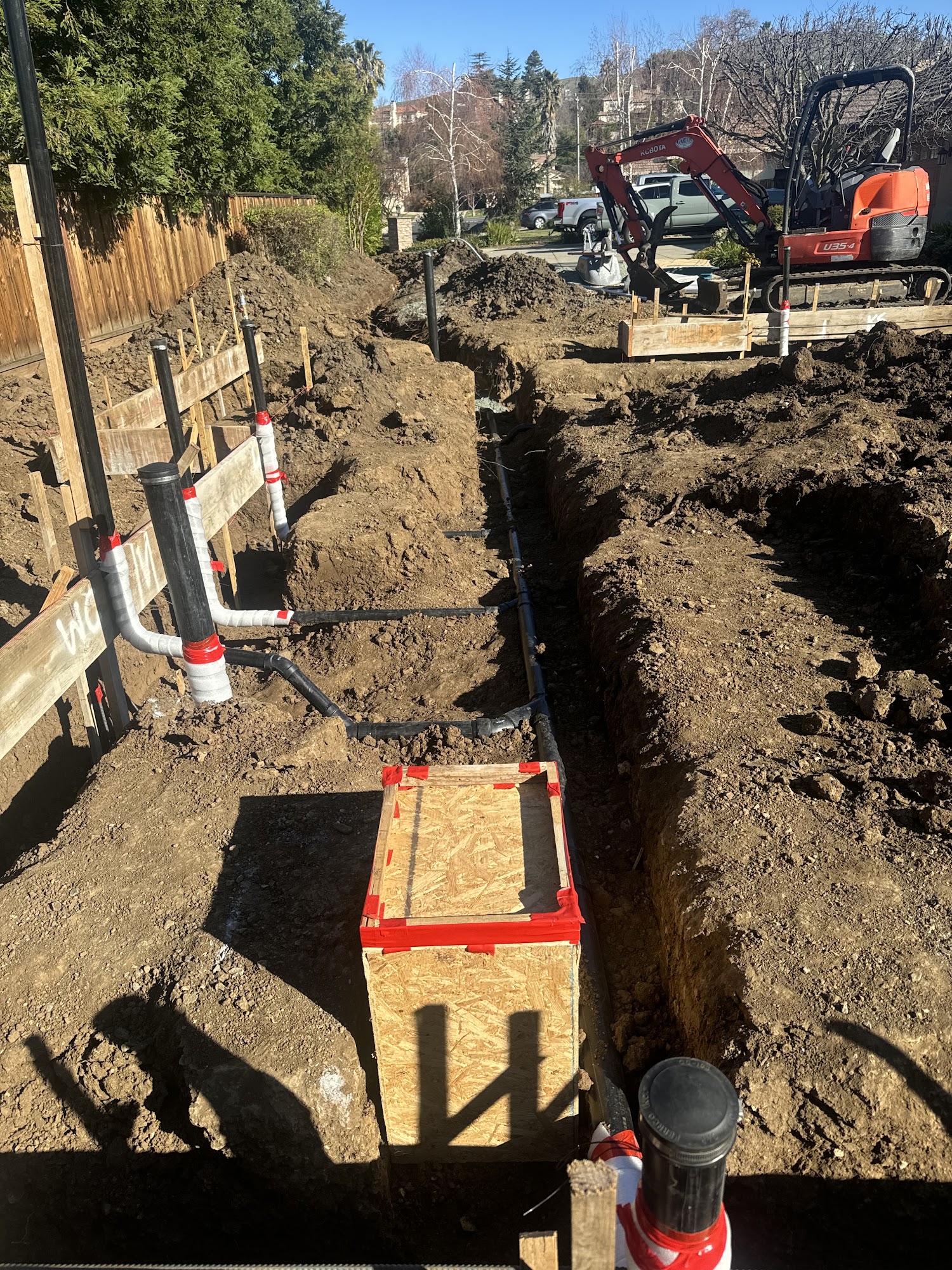
Accessory Dwelling Units (ADUs)—whether a detached backyard cottage in San Ramon, a garage conversion in Pleasanton, or an in-law unit in Dublin—are one of the highest-value property investments in the Bay Area. However, underground utility connections make or break an ADU budget. At Prime Time Plumbing, we engineer and install complete ADU water, sewer, and gas systems that pass municipal inspections the first time.
1. Gravity Sewer Lateral Tie-In vs. Sewage Ejector Pump Systems
Water and waste flow downhill by gravity at a code-mandated slope of 1/4 inch per linear foot (2% grade). If your backyard ADU is 80 feet behind your main house, the sewer trench at the point of connection must be at least 20 inches deeper than where it starts under the ADU slab:
- Gravity Sewer Tie-In: When elevation and main lateral depth allow, we trench a dedicated 3-inch or 4-inch ABS/PVC line with cleanouts every 100 feet and wye-connect directly into your existing property lateral.
- Sealed Sewage Ejector Pump Basin: When a backyard cottage or downhill lot sits lower than the street sewer main, we install a quiet, gas-tight commercial sewage ejector pump basin that lifts wastewater up to the gravity lateral reliably.
- Pre-Construction HD Camera Scope: Before you pour concrete, we camera-inspect your main house sewer lateral to confirm it is free of cracks or roots and ready to handle the added ADU load.
Explore our dedicated ADU Plumbing Specialists page to see how our licensed technicians handle installations, diagnostics, and municipal permits across San Ramon, Dublin, Pleasanton, and the East Bay.
2. Why Drainage Fixture Units (DFUs) & Water Meter Distance Matter
Many general contractors make the mistake of branching an ADU off the closest 1/2-inch backyard hose bib or old drain line without calculating total fixture loads. Adding an ADU bathroom, kitchen sink, dishwasher, and laundry washer adds significant Drainage Fixture Units (DFUs) and water demand. We calculate friction loss over the exact distance from your street water meter so running a shower in the main house never causes a pressure drop in the ADU.
3. Slab-on-Grade vs. Crawlspace ADU Rough-In Plumbing
For slab-on-grade ADUs and garage conversions, our crew saw-cuts or trenches the sub-slab soil, installs properly bedded DWV piping, sleeves all water lines through concrete footings, and pressure-tests the entire underground rough-in before concrete is poured. For raised crawlspace ADUs, we suspend insulated copper or PEX-A supply lines and graded drain lines cleanly beneath the floor joists.
| ADU Configuration | Best Plumbing Approach | Key Engineering Requirement |
|---|---|---|
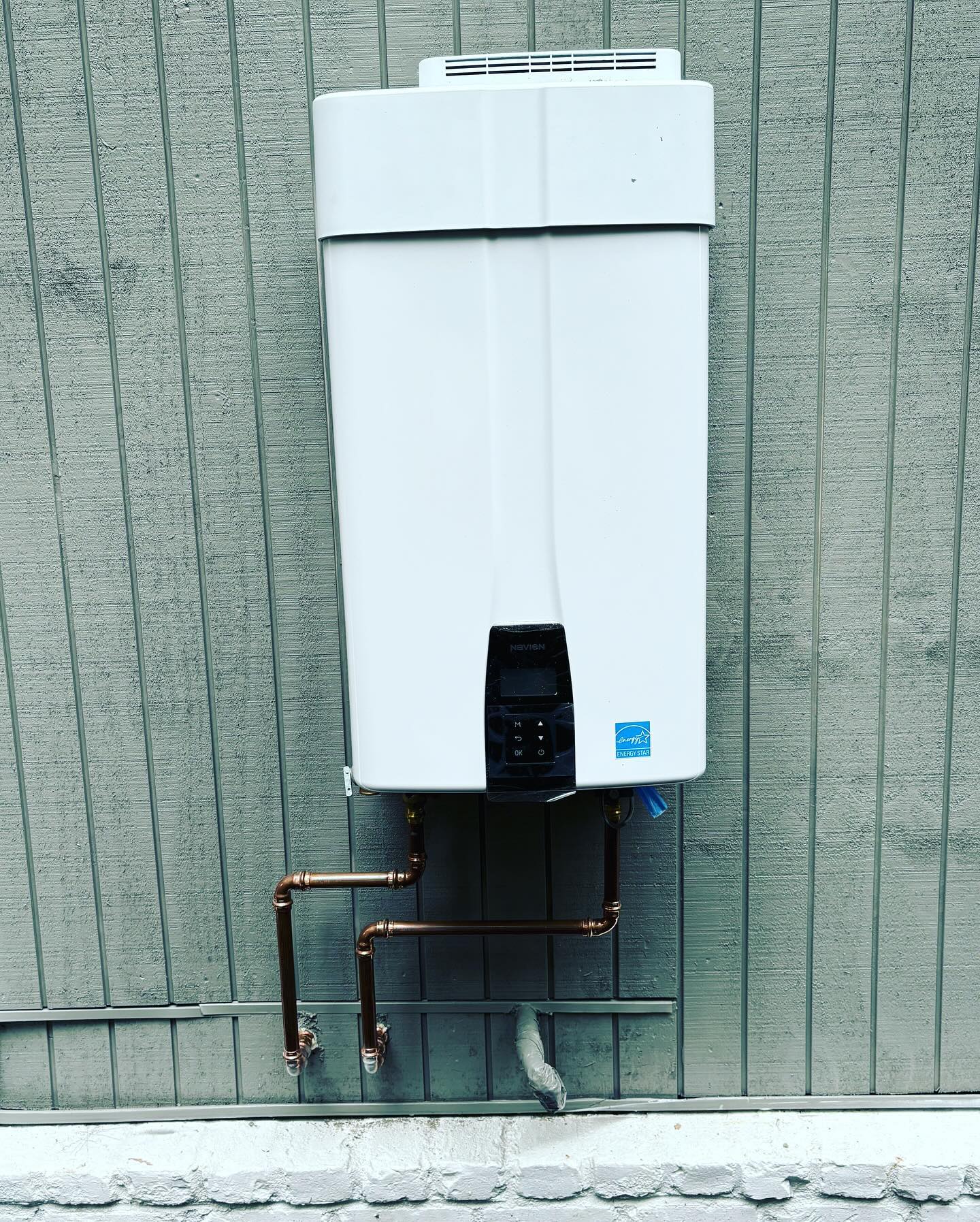
| Detached Slab-on-Grade ADU | Sub-slab DWV + sleeved PEX-A manifold + exterior tankless | Hydrostatic head test prior to slab pour |
| Raised Crawlspace ADU | Under-joist suspended drains & insulated supply lines | Easy future access & grade-beam sleeving |
| Garage Conversion ADU | Precision slab saw-cutting + main house lateral tie-in | Proper island/wet-wall venting & cleanout access |
Frequently Asked Questions
What is the best water heater for a 1-bedroom or 2-bedroom ADU?
An exterior wall-mounted tankless water heater is our most popular ADU solution because it provides endless hot water while taking up zero interior closet space inside the unit.
Do you partner with both homeowners and ADU general contractors?
Yes! We work directly with homeowner-builders, architects, and general contractors across San Ramon, Dublin, Pleasanton, Danville, and the East Bay.
Can you review our ADU architectural plans and provide a turnkey plumbing bid?
Absolutely. Text or call us at (510) 213-8213 or submit our online quote form to send over your plans for a fast, detailed estimate.
Related Tri-Valley Plumbing Guides
- How to Get Your East Bay Sewer Lateral Compliance Certificate (EBMUD, Central San & DSRSD) →
- Tankless Water Heater Installation Cost in San Ramon, Dublin & Pleasanton (2026 Guide) →
- Installing an Outdoor Kitchen or Fire Pit Gas Line in Danville: CA Depth & Safety Rules →
- Bathroom Remodel Plumbing Checklist: Relocating Drains, Shower Valves & Freestanding Tubs →